


 English
 Spanish
 French
 German
 Italian
 Chinese (Simplified)
 Japanese
 Korean
 Arabic
 Portuguese
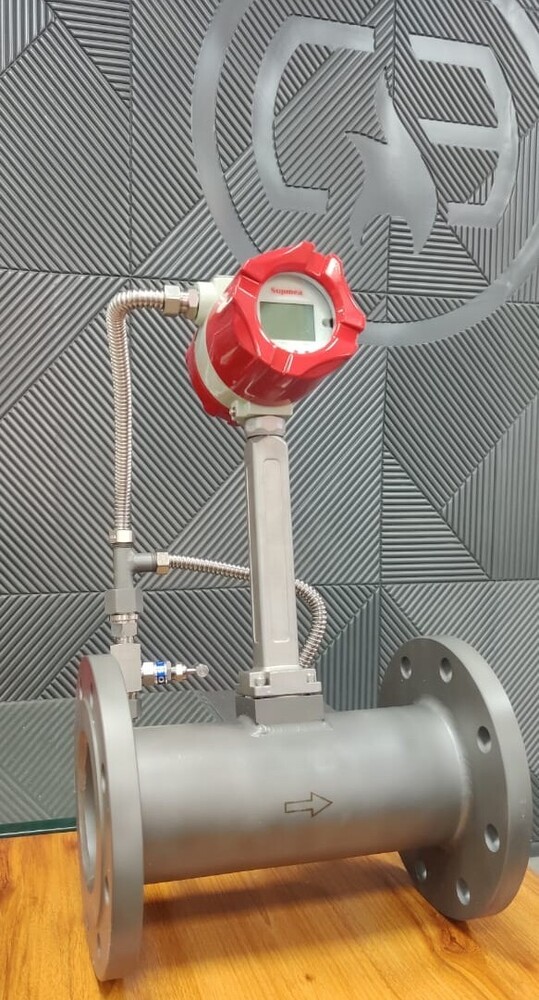
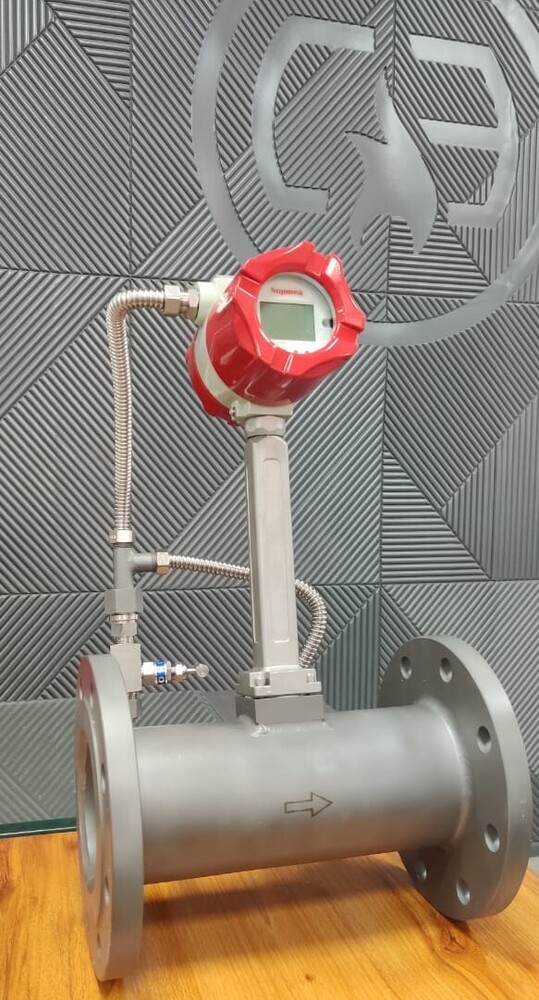
STEAM FLOW METERS
15000 INR/Number
Product Details:
- Pressure Up to 40 Bar
- Accuracy 1.5% of the actual flow rate
- Connection Flanged, Screwed, Welded
- Function Measurement of steam flow in pipelines
- Size 15 mm to 300 mm
- Click to View more
X
STEAM FLOW METERS Price And Quantity
- 15000.00 - 50000.00 INR/Number
- 15000 INR/Number
- 1 Number
STEAM FLOW METERS Product Specifications
- Up to 40 Bar
- Flanged, Screwed, Welded
- 15 mm to 300 mm
- 1.5% of the actual flow rate
- Measurement of steam flow in pipelines
STEAM FLOW METERS Trade Information
- Nava Sheva
- Cash in Advance (CID), Cash Advance (CA)
- 10 Number Per Month
- Week
- Yes
- Contact us for information regarding our sample policy
- BROWN CORRUGATED BOX
- South America, Middle East
- All India
- ISO, CE CERTIFIED
Product Description
Types of Flow Meters We Offer
1. Electromagnetic Flow Meter (Mag Meter)
Working Principle: Operates on Faraday's law of electromagnetic induction.
Suitable For: Conductive liquids (e.g., water, acids, slurries).
Key Features:
-
No moving parts maintenance-free operation
-
High accuracy even with dirty or corrosive fluids
-
Excellent for wastewater and slurry applications
Applications: Water treatment plants, mining, pulp & paper, chemical dosing.
2. Ultrasonic Flow Meter
Working Principle: Measures flow rate using ultrasonic sound waves (transit-time or Doppler methods).
Suitable For: Clean or dirty liquids, including water and oil.
Key Features:
-
Non-intrusive clamp-on design available
-
Bidirectional flow measurement
-
Ideal for retrofitting on existing pipelines
Applications: HVAC systems, irrigation, chemical industry, energy monitoring.
3. Turbine Flow Meter
Working Principle: Fluid flow turns a rotor; rotational speed is proportional to flow rate.
Suitable For: Clean, low-viscosity liquids and gases.
Key Features:
-
High accuracy and repeatability
-
Fast response time
-
Compact and economical
Applications: Fuel flow measurement, batching, pharmaceuticals, petrochemical processes.
4. Vortex Flow Meter
Working Principle: Measures flow via vortices shed by a bluff body in the flow stream.
Suitable For: Gases, steam, and liquids.
Key Features:
-
No moving parts robust and reliable
-
Handles high-pressure and high-temperature applications
-
Excellent for saturated and superheated steam
Applications: Boiler feed systems, compressed air, steam flow measurement.
6. Coriolis Mass Flow Meter
Working Principle: Measures mass flow using Coriolis effect in vibrating tubes.
Suitable For: Liquids and gases of varying viscosities and densities.
Key Features:
-
Direct mass flow measurement
-
Measures density and temperature simultaneously
-
Excellent for chemical dosing and blending
Applications: Petrochemicals, food and beverage, high-precision blending.
7. Thermal Mass Flow Meter
Working Principle: Measures mass flow based on heat dissipation in a heated sensor.
Suitable For: Clean gases (natural gas, air, nitrogen).
Key Features:
-
No moving parts, low maintenance
-
Direct mass flow measurement without pressure compensation
-
Cost-effective for gas applications
Applications: Compressed air monitoring, gas distribution, flare gas measurement.
Accurate Measurement for Challenging Steam Applications
Designed to withstand extreme process conditions, our steam flow meters deliver reliable and accurate measurement of steam flow, even at high temperatures and pressures. Engineered with robust materials and advanced electronics, they ensure operation safety and process efficiency for critical applications.
Versatility in Installation and Output
With flexible mounting orientations-both horizontal and vertical-and multiple connection options, these meters integrate effortlessly into a variety of pipeline systems. Outputs include both analog (4-20 mA) and pulse signals, supporting seamless integration with your control systems or remote monitoring setups.
Built for Durability and Practicality
Constructed from corrosion-resistant stainless steel or durable carbon steel, our steam flow meters are designed to last in demanding environments. IP65/IP68 ingress protection safeguards electronic components, while local and remote displays provide easy access to vital process data.
FAQ's of STEAM FLOW METERS:
Q: How is the steam flow meter installed in a pipeline?
A: The meter can be mounted either horizontally or vertically, depending on your piping layout. Connection options include flanged, screwed, or welded ends, making it compatible with common pipeline standards. Professional installation is recommended for accuracy and safety.Q: What types of steam can this flow meter measure?
A: This device is suitable for measuring both saturated and superheated steam, covering a wide variety of industrial and utility steam applications.Q: What are the benefits of using a steam flow meter with both local and remote display options?
A: A local display provides immediate, on-site access to flow data, while a remote display enables monitoring from a distance, improving operational convenience, safety, and control room integration.Q: In which industries or situations should these steam flow meters be used?
A: They are essential for industries like power generation, chemical processing, food and beverage manufacturing, and HVAC, especially where precise steam monitoring is crucial for process control and energy management.Q: How accurate are these steam flow meters in practical use?
A: The meters deliver a high accuracy of 1.5% of the actual flow rate, ensuring reliable data for process optimization, energy savings, and compliance with industry standards.Q: What output signals are available for data integration?
A: These meters provide standard 4-20 mA analog output, pulse signals, and options for both local and remote displays, facilitating integration with most industrial automation and monitoring systems.Q: What maintenance is required for long-term operation?
A: Routine inspections for buildup or blockages and periodic calibration checks are advised to maintain measurement accuracy and operational longevity, particularly in condensate-prone or high-pressure systems.Tell us about your requirement

Price:
Quantity
Select Unit
- 50
- 100
- 200
- 250
- 500
- 1000+
Additional detail
Mobile number
Email


Contact Us

- Plot No - 2900/53, Ankleshwar GIDC, Bharuch, Ankleshwar - 393002, Gujarat, India
- Phone : 08045804823
GST : 24AAHFC9940Q1ZT

- Mr JIMMY DANIEL (Managing Partner)
- Mobile : 08045804823
- Send Inquiry
- Mr.Jimmy Daniel
Mobile : +917405725988
Mr. Dnyaneshwar Phutane
Mobile : +917874080555
 Send Inquiry
Our Products
- Steam Boilers
- Ecoflam Burners
- IBR Boiler Mountings & Accessories
- Burners Spare
- Thermic Fluid Heater
- Boiler Sand & Furnase Materials
- FLOW METERS
- Dungs Solenoid Valve
- IBR Safety Valves
- Reflex Gauge Glass Assembly
- PID Controllers
- HOT WATER GENERATOR
- Auto blow down Valve
- GAS LINE SPARES
- GENERAL EXPORTS
- RO plant
- Led Lights
- IBR Piping Solutions
CREDENCE ENGINEERS & CO.
All Rights Reserved.(Terms of Use)
Developed and Managed by Infocom Network Private Limited.
Developed and Managed by Infocom Network Private Limited.

